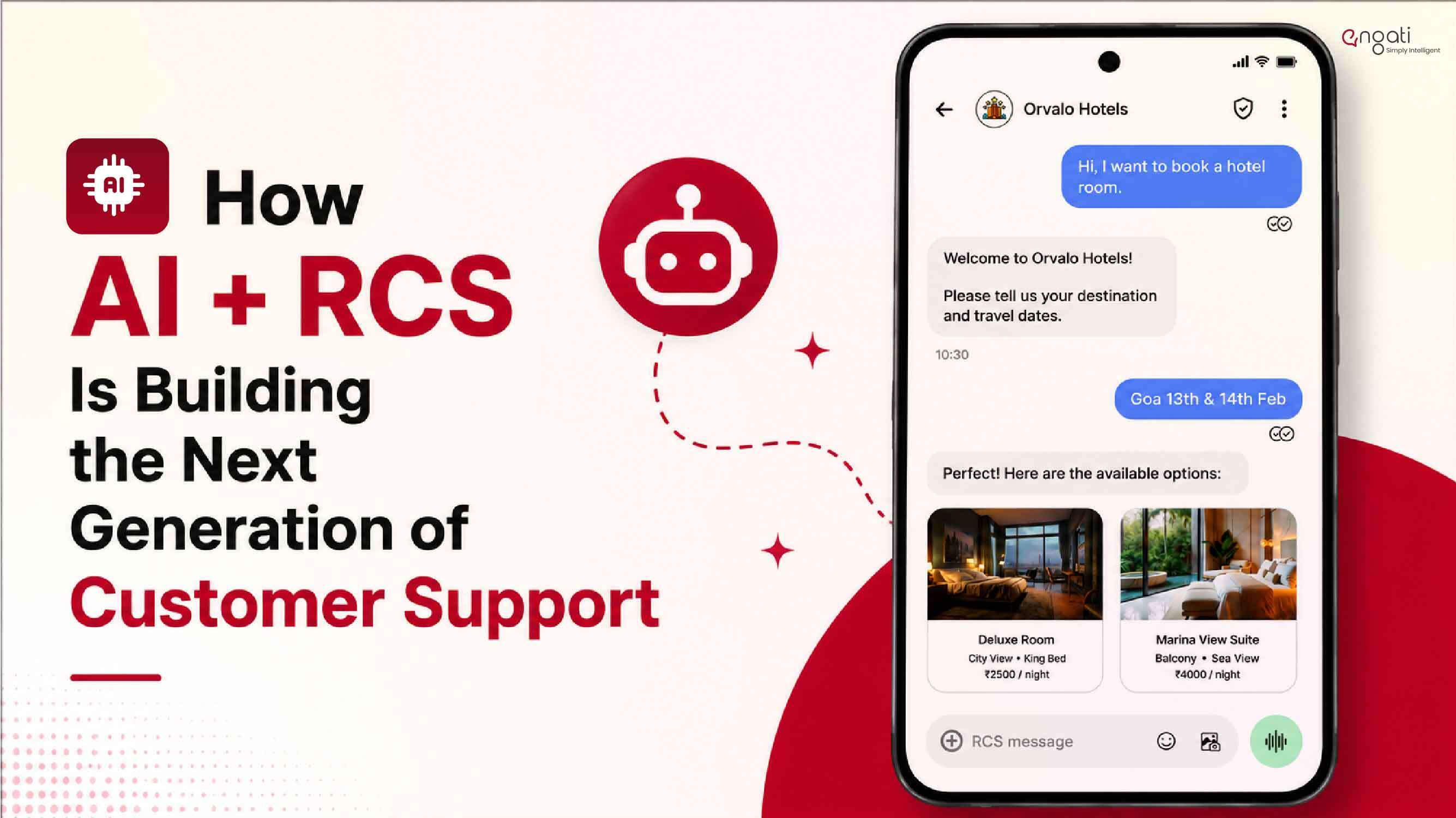
Customer support used to begin with a helpline number. Then it moved to emails, live chat windows, and support tickets. Today, it starts with a message.
A customer wants to track an order. They open their phone and send a quick message. Another customer needs help with a payment issue. Instead of waiting on hold, they expect an instant conversational response. Someone else wants to reschedule an appointment, raise a complaint, or download an invoice, all without navigating multiple apps or websites.
This shift in customer behavior is changing how businesses approach support entirely.
The brands delivering the best customer experiences today are no longer treating support as a backend operation. They’re turning it into a real-time, intelligent, conversational experience powered by AI and RCS messaging.
And that’s where platforms like Engati are helping enterprises build the next generation of customer support.
The Problem With Traditional Customer Support
For years, customer support systems have been built around processes instead of conversations.
Customers are often forced to:
- Wait for email responses
- Navigate endless IVR menus
- Repeat the same information multiple times
- Switch between channels to resolve one issue
- Download separate apps for support
At the same time, businesses are struggling with rising support volumes, growing operational costs, and increasing customer expectations.
The reality is simple: modern customers expect support to feel as seamless as chatting with a person.
Fast. Personalized. Always available.
Traditional support channels were never designed for that level of immediacy.
Enter RCS: The Evolution of Business Messaging
Most people are familiar with SMS. But SMS has limitations. It’s static, text-heavy, and lacks interactivity.
RCS, or Rich Communication Services, changes that completely.
Think of RCS as a smarter, richer version of SMS that allows businesses to create interactive conversations directly inside a customer’s native messaging app.
Instead of sending plain text updates, brands can now deliver:
- Verified business messages
- Rich images and videos
- Interactive buttons
- Carousels and menus
- Real-time conversational workflows
- AI-powered customer interactions
The experience feels less like receiving a text message and more like interacting with an app — without the friction of downloading one.
And when RCS is combined with Conversational AI, customer support becomes significantly more powerful.
Why AI + RCS Works So Well Together
AI brings intelligence to conversations. RCS brings rich, interactive messaging experiences. Together, they create support journeys that feel natural, fast, and frictionless.
Instead of waiting for a support agent, customers can instantly interact with AI-powered assistants capable of understanding intent, answering questions, and resolving issues in real time. But the real transformation lies in how conversational the experience becomes.
A customer checking a delivery update no longer receives a generic tracking link. Instead, they can open an RCS conversation that displays live order status, delivery timelines, action buttons, and support options within a single thread.
A patient trying to reschedule a healthcare appointment can simply tap suggested replies instead of calling a support center.
A telecom user troubleshooting network issues can receive guided visual instructions directly inside the messaging experience.
Support stops feeling transactional. It starts feeling intelligent.
Moving Beyond Chatbots
For a long time, chatbots were associated with robotic, frustrating customer experiences.
But conversational AI has evolved dramatically.
Modern AI platforms can now:
- Understand natural language
- Identify customer intent
- Personalize responses
- Handle complex workflows
- Maintain conversational context
- Escalate smoothly to human agents
The difference is that today’s AI systems are designed to assist customers, not trap them in automated loops. And when deployed through RCS, the interaction feels far more engaging than traditional website chat widgets or SMS conversations. This is why enterprises across industries are investing heavily in conversational support ecosystems.
Why Businesses Are Prioritizing Conversational Support
The shift toward AI-powered RCS support isn’t happening just because it looks modern. It’s happening because customer expectations have fundamentally changed.
Customers expect:
- Immediate responses
- Personalized interactions
- 24/7 availability
- Minimal effort experiences
Businesses that fail to meet those expectations risk losing customers to competitors that do. At the same time, enterprises are under pressure to scale support without proportionally increasing operational costs. Conversational AI solves both challenges simultaneously. It allows businesses to automate repetitive support interactions while delivering faster and more engaging customer experiences.
The Role of Platforms Like Engati
Building conversational customer support requires more than deploying a chatbot. Enterprises need platforms capable of managing AI automation, messaging channels, workflows, integrations, analytics, and human support journeys together. Platforms like Engati help businesses unify these experiences across channels including RCS, WhatsApp, websites, mobile apps, and social messaging platforms. The goal is not simply automation. It’s creating support experiences that feel connected, contextual, and conversational from start to finish.
The Future of Customer Support Is Already Here
Customer support is no longer confined to call centers or ticketing systems. It’s moving into conversational experiences that happen instantly, naturally, and directly within messaging channels customers already use every day. As RCS adoption continues to grow and AI becomes more advanced, businesses will increasingly move toward support models built around intelligent conversations instead of static workflows.
The companies leading this shift are not just resolving customer issues faster.They’re building stronger customer relationships through every interaction. And in the years ahead, AI + RCS will likely become one of the defining foundations of modern customer engagement. To explore how this could apply to your business book a demo.